
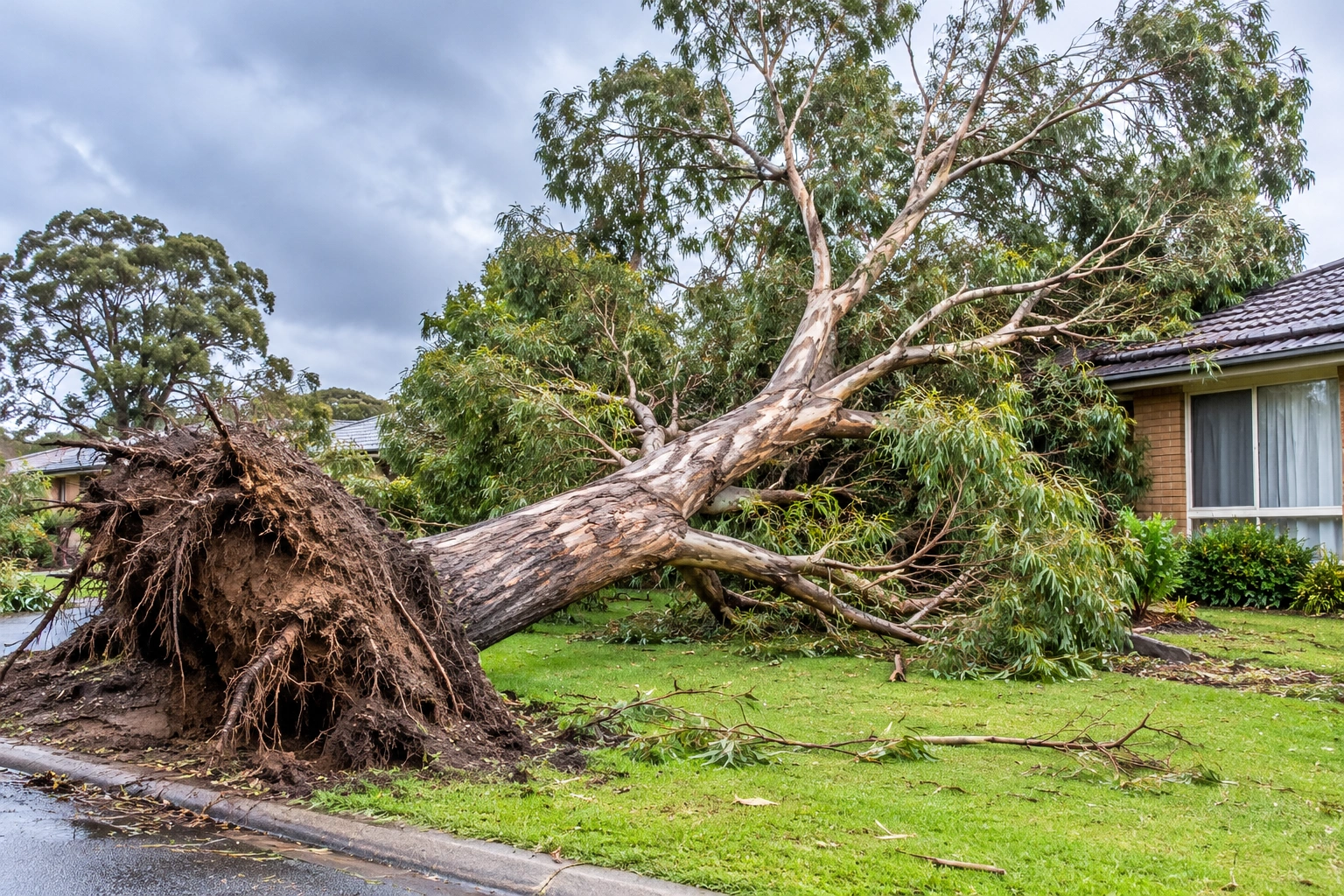
A severe storm can change the condition of a tree in just a few minutes. Strong winds, heavy rain and falling branches can leave trees damaged, leaning dangerously or lying across your roof, driveway or garden.
For Adelaide homeowners, dealing with a fallen tree often raises two important questions: Is the property safe, and will home insurance cover the removal cost?
The answer depends on your insurance policy, the cause of the damage and whether the fallen tree has damaged an insured part of your property.
Quick answer: Home insurance may cover fallen tree removal when a storm-damaged tree has damaged your insured home or another covered structure. However, if a tree falls in your garden without causing insured property damage, removal may not be covered. Stump removal can also be excluded. Always check your policy and contact your insurer before arranging non-urgent work.
Understanding what your policy covers and what to do after a tree falls can help you avoid unnecessary costs and make safer decisions.
Does Home Insurance Cover Tree Removal After a Storm?
Home insurance may cover the removal of a fallen tree when it has damaged an insured building because of a covered event, such as a storm.
For example, imagine a large tree falls onto your roof during strong winds and damages several roof sections. Depending on your policy, the insurer may cover the building damage and the reasonable cost of removing the fallen tree.
However, the situation can be different if the tree falls onto your lawn without damaging your home or another insured structure. Some policies do not cover removal in these circumstances.
Before arranging the work, contact your insurer and ask:
- Does my policy cover storm-related tree damage?
- Will the cost of removing the fallen tree be included?
- Do I need an assessor to inspect the damage?
- Can I choose my own tree removal contractor?
- Are there limits or exclusions for debris and stump removal?
You should also review your Product Disclosure Statement (PDS) to understand the conditions that apply to your policy.
For example, RAA’s home and contents insurance PDS explains its conditions for damage caused by falling trees and branches. This is an example of one insurer’s policy, not a rule that applies to every homeowner.
What Happens If a Fallen Tree Damages Your House?
When a tree falls onto your roof, garage, shed or another insured structure, the incident may be covered if the damage resulted from an insured event.
Your insurer will generally need to assess the circumstances before confirming what it will pay for.
You may be asked to provide:
- Photographs of the fallen tree and damaged areas
- Details about when and how the incident occurred
- Information about the affected structures
- An estimate or invoice for the required removal work
- Any other evidence requested by the insurer
Take photographs from a safe distance before the area is disturbed, if possible. These records can help explain what happened and support your insurance claim.
Avoid assuming that every part of the removal and clean-up will be covered. Your insurer may approve some work but exclude other costs depending on the policy.
Will Insurance Pay If a Tree Falls Without Damaging Your Home?
Not necessarily. This is an important distinction for homeowners.
A tree might fall during a storm and land on the lawn, garden or driveway without hitting the house. Although the tree may be large and difficult to remove, your insurance policy might not cover the removal cost.
Some policies provide cover only when a fallen tree damages insured property. Others may include additional benefits or different conditions.
For instance, Suncorp’s guidance on home debris removal explains how debris removal cover can depend on damage caused by an insured event. It also describes exclusions relating to stumps and roots.
If a tree has fallen without damaging your home, ask your insurer whether any other part of your policy applies before arranging removal.
Does Home Insurance Cover Tree Stump Removal?
Removing a fallen tree and removing its remaining stump are two different jobs, and insurance companies may treat them separately.
A fallen tree may need to be cut into manageable sections and removed from the property. The remaining stump, however, may be considered a garden maintenance issue rather than part of the insured damage.
This means your insurer might approve the removal of the fallen tree but not pay for stump grinding or complete stump removal.
Before arranging additional work, ask whether your approved claim includes:
- Cutting and removing the fallen tree
- Removing branches and debris
- Grinding or removing the remaining stump
- Clearing the area required for building repairs
If stump removal is not covered, you may need to arrange it separately. You can also learn about the options for dealing with a remaining tree stump.
Who Is Responsible If Your Tree Falls on a Neighbour’s Property?
Storm damage can become more complicated when a tree falls across a boundary and damages a neighbour’s property.
However, owning the land where the tree originally stood does not automatically mean you are responsible for every incident.
If the tree was already showing signs of poor health, had dangerous branches or had previously been identified as a risk, the circumstances may be different. Taking reasonable steps to address known tree hazards can help reduce the risk of damage and disputes.
If a tree from your property damages a neighbour’s house, fence or other property:
- Make sure everyone is safe and keep people away from the damaged area.
- Photograph the damage from a safe location.
- Inform your insurer and ask how to proceed.
- Avoid making assumptions about who must pay.
- Keep records of relevant communication and repair information.
Financial Rights Legal Centre provides useful information in its guide, Tree Damage in a Storm, including issues involving neighbouring properties and insurance.
If there is a disagreement about responsibility, contact your insurer or seek appropriate legal advice.
What Should You Do Immediately After a Tree Falls During a Storm?
After a storm, you may feel tempted to start clearing branches or moving fallen sections straight away. However, damaged trees can be unstable, and branches may remain under tension.
Follow these steps before arranging non-emergency removal.
1. Keep people away from the damaged tree
Do not allow children, pets or other people to enter the affected area. A fallen tree may shift unexpectedly, and damaged branches can fall without warning.
2. Stay away from powerlines
If a tree or branch has contacted a powerline, treat the situation as dangerous. Do not touch the tree, branches, fence or anything else that may be in contact with the line. Contact emergency services or the electricity network operator as appropriate.
3. Photograph the damage
If it is safe to do so, take clear photographs of the fallen tree, damaged structures and surrounding area. These records may help your insurer assess the incident.
4. Contact your insurance company
Notify your insurer as soon as possible. Ask whether an assessor needs to inspect the damage and whether the insurer will arrange or approve a contractor.
5. Arrange professional assistance
If the tree is damaging a structure, blocking access or creating a safety concern, professional assessment may be necessary. Avoid attempting to cut or move a large fallen tree yourself.
Where possible, notify your insurer before arranging debris removal. However, if immediate action is required to protect people or prevent further damage, prioritise safety and follow emergency instructions. Keep records of any necessary work and notify your insurer as soon as possible.
The Australian Financial Complaints Authority’s storm and disaster guidance provides further information about documenting damage and dealing with insurers after severe weather.
When Should You Contact a Professional Tree Removal Company?
Not every storm-damaged tree needs to be removed. Depending on its condition, location and remaining stability, pruning or other work may be sufficient.
However, professional assistance is worth arranging when:
- A tree has fallen onto a house, shed, garage or fence.
- A large branch has split or become lodged in the tree.
- The trunk is leaning noticeably after the storm.
- The tree is blocking a driveway or access route.
- Heavy branches are hanging over areas used by people.
- The tree appears unstable or at risk of falling further.
The appropriate solution depends on the tree’s condition and its surroundings. A professional can assess the situation and explain the work that may be required.
If a tree presents an immediate safety risk, keep people away and seek appropriate emergency assistance. You can learn more about how emergency tree removal is approached in Adelaide.
How J & B Tree Service Can Help With Storm-Damaged Trees
If a damaged tree needs to be removed rather than pruned, you can learn more about our professional tree removal services across Adelaide and the approach we take to different tree removal situations.
At J & B Tree Service, we understand that damaged trees can create practical concerns for property owners. The right approach depends on the size and condition of the tree, the surrounding structures and the access available at the property.
If a tree has been affected by severe weather, arrange a professional assessment before attempting to cut or move large sections yourself.
If you are making an insurance claim, check with your insurer about its requirements and approval process before arranging non-urgent work.
You can also read what Adelaide homeowners can miss when a tree is affected by a storm to understand why a tree that appears healthy can still develop problems after severe weather.
If you need professional assistance with a storm-damaged tree, contact J & B Tree Service to discuss your situation and the appropriate next steps.
Frequently Asked Questions
Does home insurance cover a tree that falls during a storm?
It may, particularly when the fallen tree damages an insured building. However, cover depends on the policy, the cause of the damage and any applicable exclusions or limits.
Will insurance pay to remove a fallen tree from my garden?
Not always. Some policies exclude removal when a tree falls without damaging the insured home or another covered structure. Check your PDS and contact your insurer.
Does insurance cover the cost of removing a tree stump?
Stump removal is often treated separately from removing the fallen tree. Some policies exclude it, although limited exceptions may apply when the stump interferes with insured building repairs.
Should I remove a fallen tree before contacting my insurer?
Where possible, contact your insurer first and ask about its assessment and approval process. If immediate action is necessary to protect people or prevent further damage, prioritise safety, keep records and notify your insurer as soon as possible.
Who pays if my neighbour’s tree falls onto my property?
Responsibility depends on the circumstances, including the tree’s condition before it fell and the cause of the incident. Your own insurer may be the appropriate first point of contact. Do not assume your neighbour is automatically responsible.
Can I remove a storm-damaged tree myself?
Removing large or unstable trees can be dangerous, particularly when branches are under tension or the tree is close to buildings and powerlines. Keep clear and seek professional assistance.
Need Help With a Storm-Damaged Tree in Adelaide?
A fallen or damaged tree can create safety concerns and disrupt your property. Before attempting to move it, make sure the area is safe and check with your insurer about the next steps.
If you need professional assistance with a storm-damaged tree, contact J & B Tree Service to discuss your situation and arrange an appropriate assessment.