
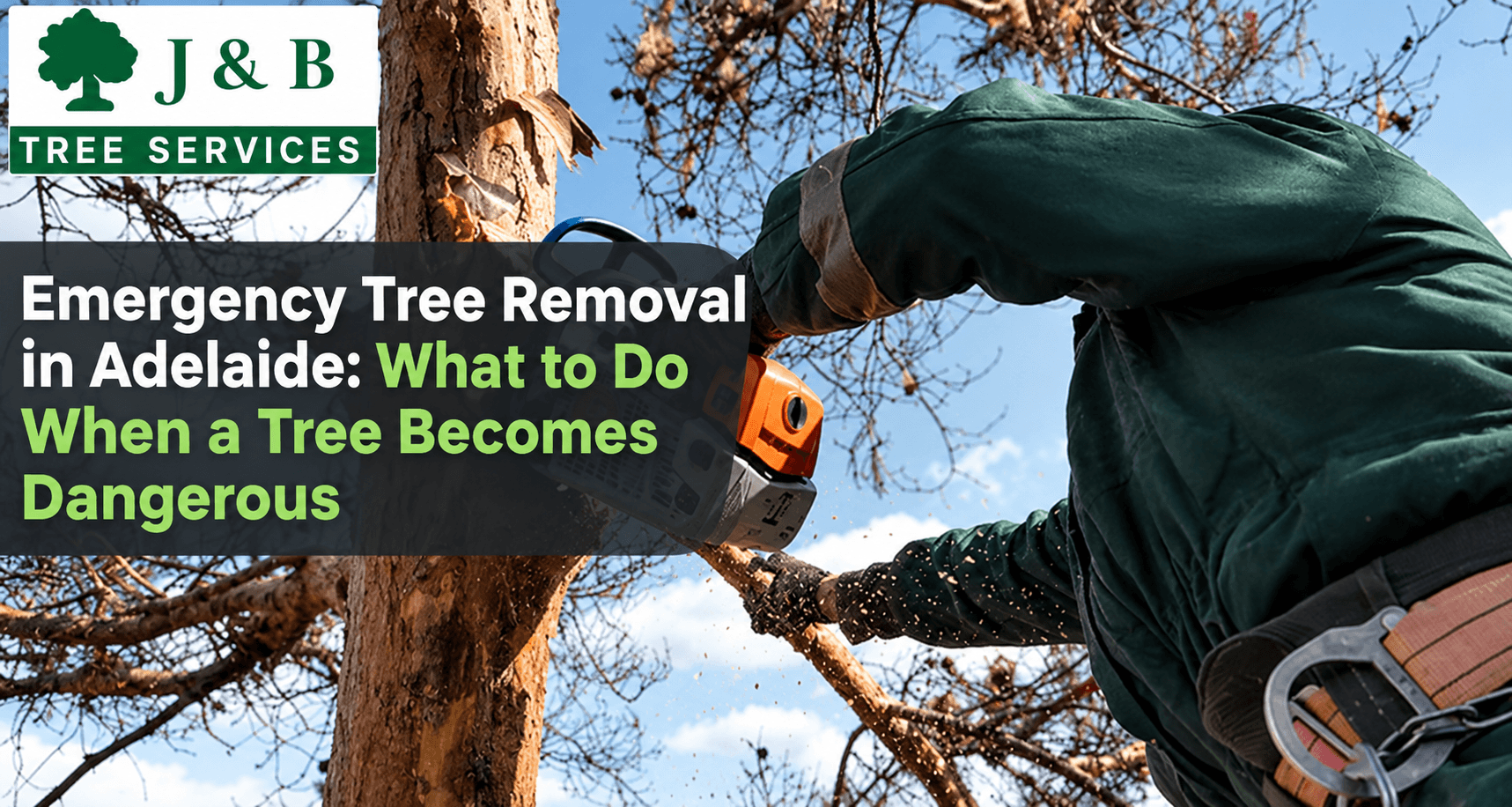
Storms, strong winds and unexpected tree damage can create serious safety concerns for homeowners and businesses. A fallen tree, a split trunk or a large hanging branch may threaten people, buildings, vehicles and access areas.
Knowing what to do when a tree becomes dangerous can help you protect your property and make informed decisions about the next steps.
Emergency tree removal may be necessary when a tree or large branch presents an immediate risk to people or property. However, not every damaged tree needs to be removed. The safest solution depends on the extent of the damage, the tree’s condition and whether the hazard can be managed through appropriate pruning or other work.
For Adelaide property owners, the priority is to keep people away from danger, arrange the appropriate emergency assistance and have the tree assessed by a qualified professional.
What Should You Do If a Tree Becomes Dangerous?
If a tree falls, splits or develops dangerous hanging branches, follow these steps before arranging tree work.
- Keep people away: Establish a safe distance from the damaged tree, especially if branches are hanging overhead or the trunk appears unstable.
- Check for immediate hazards: Look for damaged buildings, blocked access, electrical wires and other dangers without approaching them.
- Contact the appropriate emergency service: If there is an immediate threat to life, contact emergency services. If a tree or branch is touching or threatening electrical lines, stay well clear and contact the relevant electricity network operator.
- Arrange a professional assessment: Once the area can be approached safely, contact a suitable tree service provider to assess the damage and explain the available options.
- Document the damage if safe: Take photographs from a safe location for your insurer, and keep records of relevant expenses and communications.
Never attempt to cut a large hanging branch, climb a storm-damaged tree or operate a chainsaw near an unstable trunk. Damaged trees can shift unexpectedly, even when they appear stationary.
1. Recognise the Warning Signs of a Tree Emergency
Not every tree problem requires immediate removal, but some warning signs should never be ignored.
After a storm or period of severe weather, inspect your property from a safe distance for visible changes.
A tree has fallen or is leaning suddenly
A tree that has fallen across a driveway, damaged a building or suddenly developed a pronounced lean may require urgent attention. The risk depends on its stability, the direction of movement and the surrounding environment.
Avoid approaching a tree with exposed or lifted roots, as the root plate and trunk may move further without warning.
Large branches are hanging or partially broken
Broken branches caught in the canopy can fall without warning. These branches may be difficult to see from the ground and can remain unstable even after the wind has stopped.
Keep people away from the area beneath the affected branches until a professional has assessed the situation.
The trunk has split or developed major cracks
Significant trunk cracks, split unions and extensive structural damage may indicate that a tree’s stability has been compromised. A professional assessment can help determine the severity of the problem and whether urgent action is required.
A tree has fallen onto a building or vehicle
A fallen tree can cause structural damage and may leave other branches or sections of the tree under tension. Do not attempt to pull, cut or move the tree yourself.
Contact the relevant emergency services if people are trapped or there is an immediate threat to life. Arrange qualified tree assistance when it is safe to do so.
2. Understand When Emergency Tree Removal Is Necessary
Emergency tree removal is intended to address an urgent hazard, not simply to remove a tree because it looks untidy or has lost some branches.
Depending on the circumstances, a professional may recommend removing a dangerous limb, reducing a specific hazard through appropriate pruning or dismantling the entire tree.
For example, a partially broken branch above a frequently used driveway may need urgent attention. A severely split tree beside an occupied building may require a more extensive response.
The decision should take into account:
- The extent of the damage and the tree’s structural condition.
- The likelihood of further branch or trunk failure.
- The proximity of people, buildings, vehicles and access routes.
- Whether the tree can be made safe without complete removal.
- The equipment and access needed to carry out the work safely.
If the assessment indicates that the tree cannot reasonably be retained, professional tree removal for hazardous or damaged trees may be the appropriate next step.
The objective is to manage the immediate risk while avoiding unnecessary damage to the surrounding property.
3. Why Professional Emergency Tree Services Matter
Emergency tree work can be more complex than routine pruning or planned tree removal. A storm-damaged tree may contain unstable branches, a weakened trunk or sections under considerable tension.
Trying to remove these hazards without suitable training and equipment can put the homeowner and other people at risk.
Depending on the situation, a professional tree team may use specialised climbing systems, elevated work platforms, cranes or controlled dismantling techniques. The appropriate method depends on the tree, the site and the hazards involved.
A professional assessment should consider the surrounding buildings, fences, gardens, vehicles and overhead services before work begins.
When choosing a contractor, ask about relevant qualifications, insurance, the proposed work method and what is included in the quote. For urgent situations, explain the hazard clearly so the contractor can understand the circumstances before arranging the next step.
4. Can a Damaged Tree Be Saved Instead of Removed?
Yes, some storm-damaged trees can be retained. The correct response depends on the extent of the damage, the condition of the remaining structure and the risks around the tree.
For example, a tree with a limited amount of broken or damaged foliage may benefit from appropriate pruning. A tree with severe trunk failure or extensive root damage may be much more difficult to retain safely.
A qualified arborist can assess the tree and explain whether pruning, monitoring, additional investigation or removal is appropriate.
Where the tree can be retained safely, suitable tree pruning and maintenance options may help address damaged branches and manage the remaining canopy.
Avoid making the decision based solely on how the tree looks immediately after a storm. The extent of the structural damage and the likelihood of further failure are more important than appearance alone.
5. Check Council Requirements Before Removing a Tree
Emergency situations can create uncertainty about whether council approval is required. In South Australia, specific rules apply to regulated and significant trees, and exemptions or urgent-work provisions may apply in particular circumstances.
PlanSA explains that urgent work involving a regulated or significant tree may be carried out without prior development approval in an emergency, but the owner must still lodge the relevant development application as soon as possible.
This does not mean that every tree can be removed without approval whenever it is damaged or inconvenient. The circumstances and applicable rules matter.
For non-urgent work, check the relevant council and planning requirements before arranging removal or substantial pruning. If the situation involves an immediate hazard, contact the appropriate emergency service or council for guidance where necessary.
You can review the official South Australian guidance on removing regulated and significant trees before proceeding with planned tree work.
6. What Happens During Emergency Tree Removal?
The exact process depends on the damage and the conditions at the property. However, professional emergency tree work generally involves several key stages.
Initial assessment
The contractor evaluates the visible damage, identifies immediate hazards and determines whether the site can be accessed safely.
Work planning
The team selects an appropriate method for removing the dangerous branch or tree. This may involve sectional dismantling or specialised equipment where access is restricted.
Hazard management
The work area is controlled to keep people away from falling branches, equipment and other potential dangers. Nearby buildings, vehicles and services must be considered during the operation.
Removal and site cleanup
The contractor carries out the agreed work and manages the resulting branches and debris according to the scope of the job.
Follow-up recommendations
If other trees have been affected by the same storm, a further assessment may be useful. The contractor may also explain whether additional pruning or maintenance is recommended.
Before work starts, clarify what the quote includes, particularly debris removal, timber disposal and any additional stump work.
7. What Should You Do About Insurance After Tree Damage?
If a storm damages a tree or causes it to fall, contact your insurer to understand your policy’s requirements and the available cover.
If it is safe to do so, photograph the damage before cleanup begins. Keep copies of quotes, invoices and communications relating to the incident.
Do not delay urgent safety measures while waiting for an insurance decision if there is an immediate danger. Explain the circumstances to your insurer as soon as practical and retain records of any emergency work undertaken.
Insurance policies differ, so avoid assuming that all tree removal, debris cleanup or property damage expenses will automatically be covered.
Frequently Asked Questions About Emergency Tree Removal
When should I call for emergency tree removal?
Contact a professional tree service provider when a tree or large branch has become unstable, has fallen and created a hazard, or presents a credible risk to people or property. If there is an immediate threat to life or an electrical hazard, contact the appropriate emergency service or electricity network operator first.
Can a storm-damaged tree be removed on the same day?
Same-day work depends on the severity of the hazard, contractor availability, weather, site access and the equipment required. Explain the situation clearly when contacting a provider so the urgency can be assessed. Do not assume that every emergency request can be completed immediately.
Does every storm-damaged tree need to be removed?
No. Some trees can be retained through suitable pruning or other management measures. Removal may be necessary when the damage is severe and the hazard cannot reasonably be managed through less extensive work.
Does emergency tree removal require council approval in Adelaide?
The requirements depend on the tree and the circumstances. South Australia has specific provisions for regulated and significant trees, including certain urgent-work situations. Check the applicable rules and obtain advice from the relevant council or planning authority where necessary.
What affects the cost of emergency tree removal?
Costs can depend on the tree’s size, the severity of the damage, site access, nearby structures, equipment requirements, labour and the amount of debris to be removed. Request a written quote where circumstances allow, and confirm any additional charges.
Should I remove fallen branches myself?
Small branches on the ground may be manageable when there are no hazards, but large, suspended or tensioned branches can be dangerous. Never work near damaged power lines or attempt to cut an unstable tree. Seek qualified assistance for hazardous debris.
Get Professional Advice for Emergency Tree Removal in Adelaide
A damaged or unstable tree can create serious concerns for your family, visitors and property. Acting carefully, keeping people away from danger and obtaining a professional assessment can help you determine the safest practical solution.
Whether a tree has suffered storm damage, developed a major structural defect or fallen across an access area, the appropriate response depends on the severity of the hazard and the conditions at the site.
J&B Tree Services provides tree removal services in Adelaide and can help assess tree-related concerns and explain the available options.
Contact J&B Tree Services on 0414 223 870 to discuss your situation and arrange an assessment. For immediate threats to life or electrical safety, contact the appropriate emergency service or electricity network operator first.