
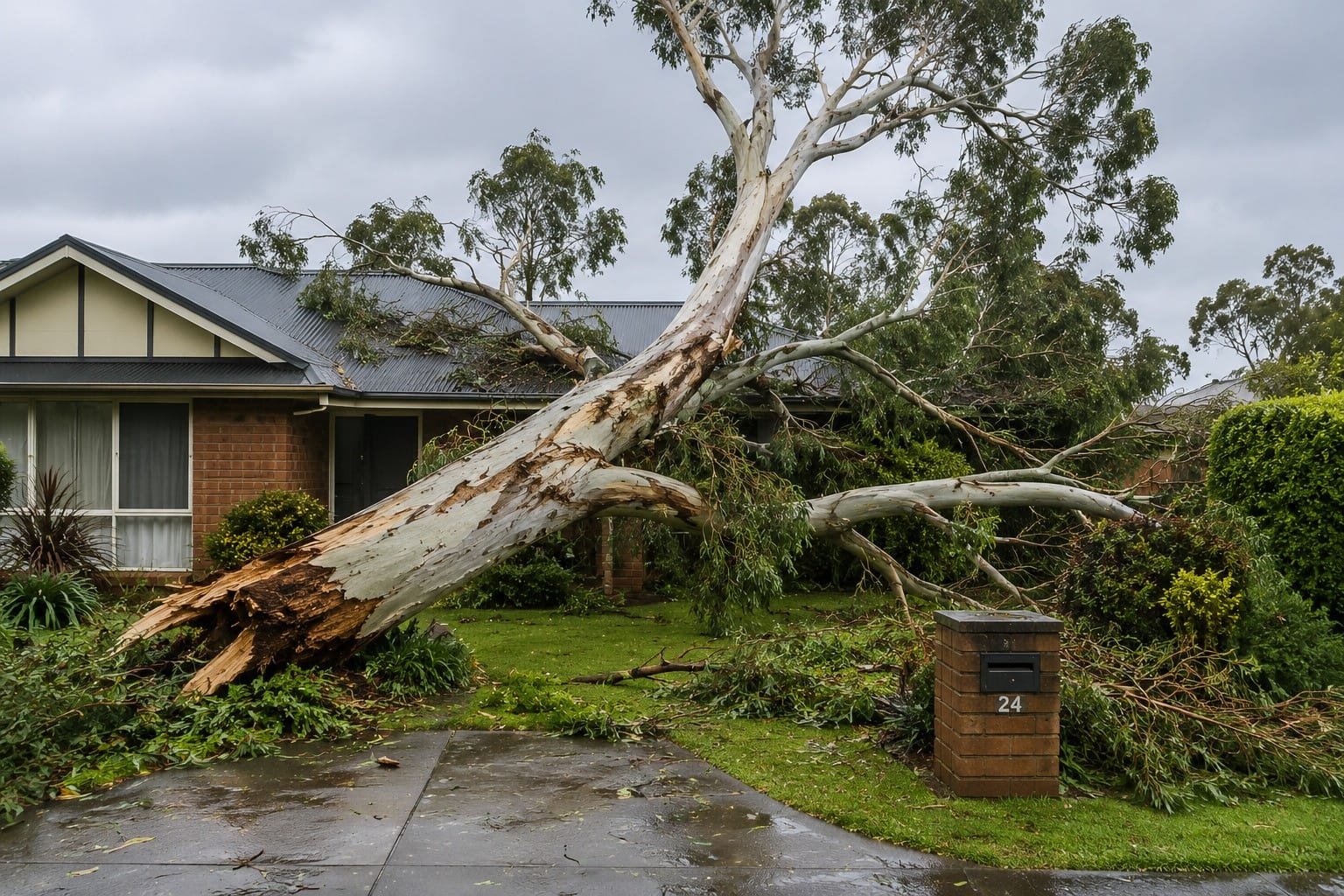
After every major storm in Adelaide, homeowners are often surprised to discover that a tree they thought was healthy has suddenly dropped a large branch, split down the middle, or even fallen entirely.
The truth is that trees can hide serious structural problems for years. While they may appear strong and healthy from the outside, hidden decay, root damage, disease, or storm stress can weaken a tree internally. It often takes strong winds and heavy rain to reveal these underlying issues.
Understanding the warning signs can help protect your family, vehicles, home, and neighbouring properties from unexpected tree failures.
Why Storms Expose Hidden Tree Problems
Trees are built to withstand normal weather conditions, but severe storms place enormous pressure on trunks, limbs, and root systems.
When strong winds hit Adelaide, they can expose hidden defects such as:
- Internal trunk decay
- Weak branch unions
- Root system damage
- Pest infestations
- Fungal diseases
- Previous storm damage
Many tree failures occur not because of the storm itself, but because the storm exposes a weakness that already existed.
If your property contains mature trees, scheduling a professional inspection after severe weather can identify hazards before they become emergencies.
Learn more about our Arborist Adelaide services.
7 Warning Signs Your Tree May Be Unsafe
1. Cracks in the Trunk
Large vertical cracks often indicate structural weakness. These cracks may widen during storms and eventually cause part of the tree to fail.
2. Dead or Hanging Branches
Dead branches can fall unexpectedly, especially during windy conditions.
Look for:
- Branches without leaves
- Broken limbs caught in the canopy
- Branches showing signs of decay
3. Fungal Growth Around the Base
Mushrooms growing around roots or near the trunk often indicate internal decay.
Common signs include:
- Bracket fungi
- Mushrooms near root zones
- Soft or decaying bark
Fungal activity can significantly weaken tree stability.
4. A Tree That Suddenly Starts Leaning
A slight natural lean isn’t always a problem.
However, if a tree begins leaning after a storm, it may indicate:
- Root failure
- Soil movement
- Structural instability
This should be assessed immediately.
5. Hollow Cavities
Large cavities inside trunks can weaken the structural integrity of a tree.
While some trees can survive with hollow sections, extensive cavities increase the risk of failure during storms.
6. Exposed or Damaged Roots
Roots anchor the entire tree.
Damage may occur due to:
- Construction work
- Soil erosion
- Heavy rainfall
- Vehicle traffic
Exposed roots can reduce tree stability and increase failure risk.
7. Sparse Canopy Growth
If one side of the tree appears thin, stressed, or has excessive dead leaves, there may be an underlying health problem affecting the root system or internal structure.
A healthy tree should display consistent foliage throughout the canopy.
Tree Warning Signs vs Recommended Action
| Warning Sign | Recommended Action |
|---|---|
| Cracked trunk | Immediate arborist inspection |
| Dead branches | Professional pruning |
| Fungal growth | Tree health assessment |
| Leaning tree | Urgent safety inspection |
| Hollow trunk | Structural evaluation |
| Root damage | Arborist assessment |
| Canopy decline | Tree health diagnosis |
Can Storm-Damaged Trees Be Saved?
Many homeowners assume a damaged tree must be removed.
In reality, many trees can be preserved through:
- Corrective pruning
- Weight reduction pruning
- Cabling and bracing
- Disease treatment
- Ongoing monitoring
A qualified arborist can determine whether removal is necessary or if the tree can be safely retained.
Explore our Tree Removal Adelaide service when removal becomes the safest option.
Why Professional Tree Inspections Matter
Tree defects are not always visible from ground level.
A professional inspection can identify:
- Hidden decay
- Weak branch attachments
- Root damage
- Structural defects
- Disease symptoms
- Storm-related hazards
Early detection often prevents expensive property damage and emergency call-outs.
For Adelaide homeowners, routine inspections are one of the most effective ways to manage tree safety.
Frequently Asked Questions
1. How often should trees be inspected in Adelaide?
Most mature trees should be professionally inspected every 1–3 years and after significant storms.
2. Can a healthy-looking tree still be dangerous?
Yes. Internal decay, root damage, and structural weaknesses often remain hidden until severe weather exposes them.
3. What causes trees to fall during storms?
The most common causes include root failure, internal decay, disease, and weak branch attachments.
4. Should I remove a leaning tree?
A newly leaning tree should be inspected immediately. Removal may not always be necessary, but assessment is critical.
5. What are the signs of internal tree decay?
Common signs include fungal growth, cavities, dead branches, bark abnormalities, and canopy decline.
Protect Your Property Before the Next Storm
The most dangerous trees are often the ones that appear perfectly healthy.
If your property has mature trees, visible cracks, dead branches, fungal growth, or storm-related damage, don’t wait until the next storm reveals a hidden problem.
J&B Tree Services provides professional tree inspections, pruning, risk assessments, and tree removal services across Adelaide.
Our experienced team can identify hazards early and recommend the safest solution for your property.
Contact J & B Tree Services
📞 0414 223 870
Book a professional tree inspection today and gain peace of mind before the next storm season arrives.